
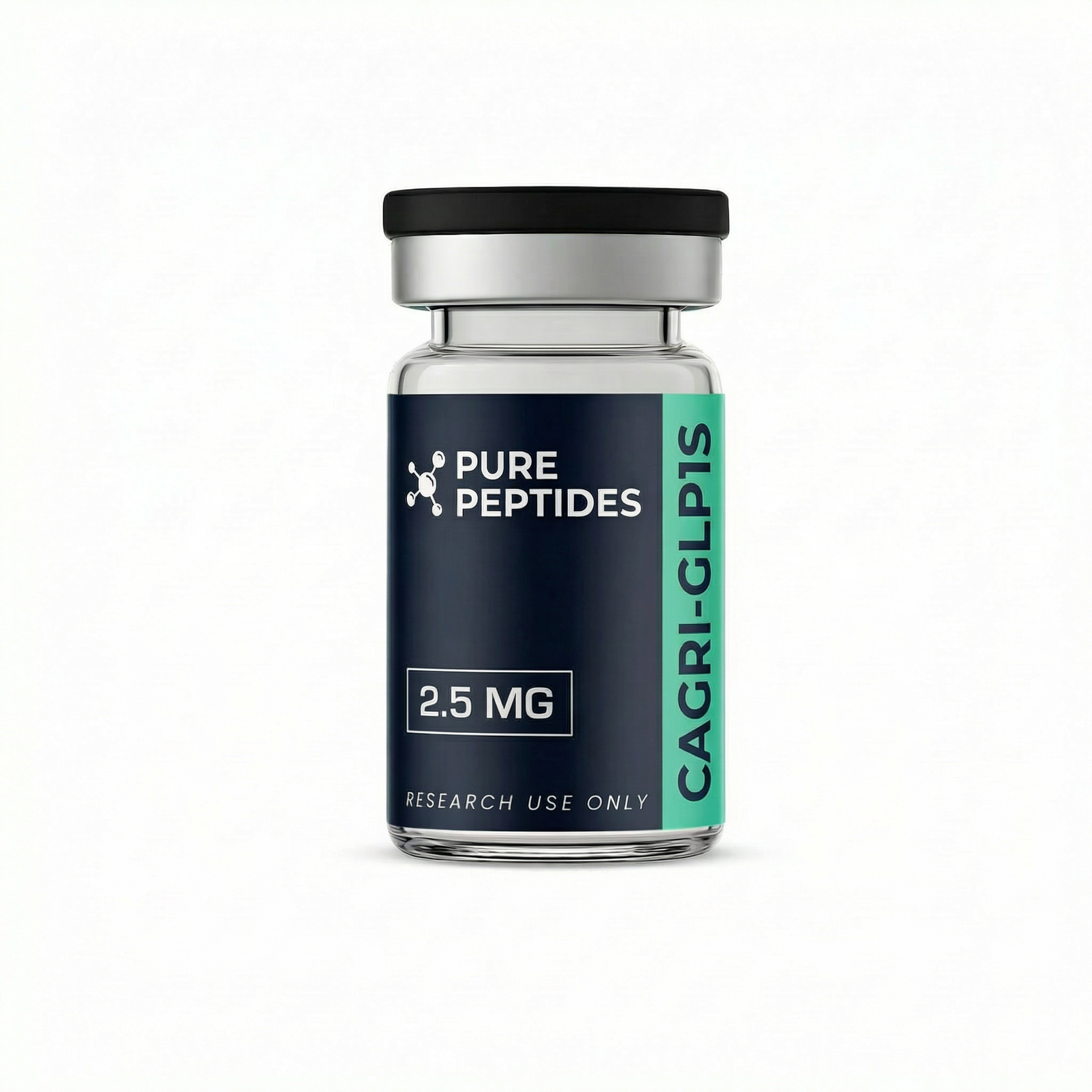
Cagrilintide / GLP-1 S
Investigating co-agonism in metabolic research.
Ships Next Day
Order before midnight — dispatched tomorrow with cold-chain packaging
HPLC Verified
≥99.6% purity
Lyophilized
Powder format
Free Shipping
Cold-chain included
COA Included
Every batch
Verify Batch
Lot-level COA
Check required bloodwork before researching
View the Research Safety Companion — biomarkers, supplement stack & red flags for this compound
Cagrilintide, a fatty acylated amylin analog, is often studied in conjunction with GLP-1 S, a glucagon-like peptide-1 receptor agonist. This combination is of interest for its potential to co-activate multiple receptors in metabolic signaling pathways within research models.
Research Highlights
Reconstitution Calculator
Use bacteriostatic water for reconstitution. Store lyophilized at -20°C.
Quantity
Certificate of Analysis (COA)
Verified by Auxilium Pharmaceutical Consulting
Every batch is HPLC-tested to ≥99.6% purity. Certificate of Analysis and MSDS available with every order.
Frequently Asked Questions
What is Cagrilintide / GLP-1 S?
Cagrilintide, a fatty acylated amylin analog, is often studied in conjunction with GLP-1 S, a glucagon-like peptide-1 receptor agonist. This combination is of interest for its potential to co-activate multiple receptors in metabolic signaling pathways within research models.
What purity is Cagrilintide / GLP-1 S supplied at?
Pure Peptides supplies Cagrilintide / GLP-1 S at ≥99.6% (HPLC) purity, verified by HPLC analysis. A Certificate of Analysis (COA) is available for every batch.
How should Cagrilintide / GLP-1 S be stored?
Store lyophilized at -20°C to -80°C. Reconstituted solutions should be stored at 4°C for short-term use or -20°C for long-term storage.
Does Cagrilintide / GLP-1 S come with a Certificate of Analysis?
Yes. Every batch of Cagrilintide / GLP-1 S from Pure Peptides includes a Certificate of Analysis (COA) confirming identity, purity, and quality. MSDS documentation is also available upon request.
Related Compounds — Metabolic Peptides
Verified Reviews
What Researchers Say
No reviews yet
Be the first to share your research experience with Cagrilintide / GLP-1 S
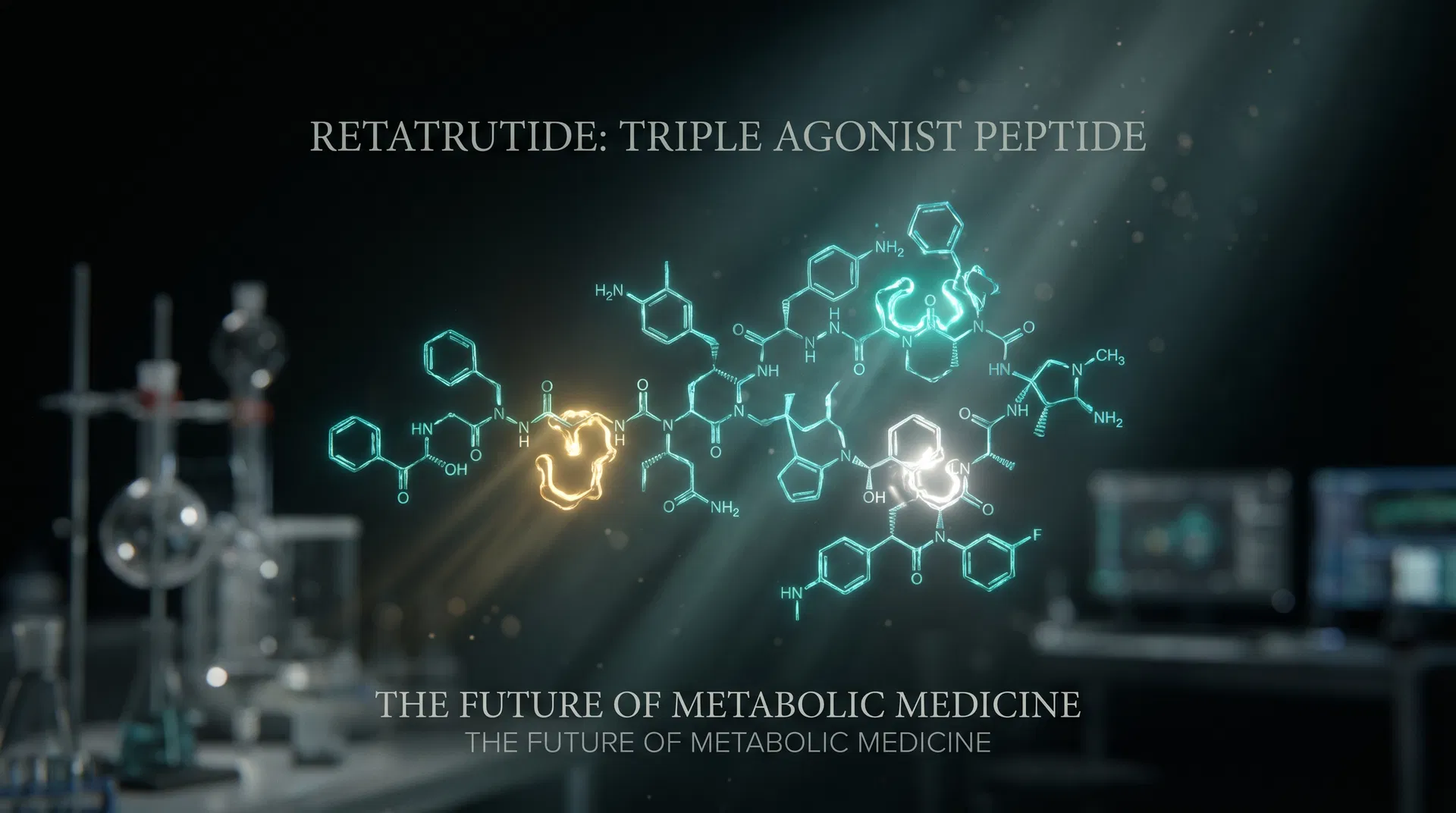
Retatrutide (Reta Peptide): The Triple Agonist Rewriting Metabolic Research
Retatrutide — searched as 'reta peptide' — is a synthetic triple agonist targeting GLP-1R, GIPR, and GCGR simultaneously. Phase 2 data showed ~24% projected weight reduction at 48 weeks, surpassing all predecessor GLP-1 compounds.

Semaglutide: GLP-1 Receptor Agonist Research Overview
Semaglutide is a GLP-1 receptor agonist with a fatty acid modification enabling albumin binding and a plasma half-life of approximately one week. It has been extensively studied in metabolic disease models and has become a key research tool for understanding the GLP-1 axis.

Tirzepatide: Dual GIP/GLP-1 Receptor Agonist Research Review
Tirzepatide is a novel dual agonist targeting both the GIP (glucose-dependent insulinotropic polypeptide) and GLP-1 receptors. Its dual mechanism has produced some of the most significant metabolic effects observed in incretin-based research.
Cagrilintide / GLP-1 S
Cagrilintide / GLP-1 S
$139.00