
Retatrutide (Reta Peptide): The Triple Agonist Rewriting Metabolic Research
Retatrutide — searched as 'reta peptide' — is a synthetic triple agonist targeting GLP-1R, GIPR, and GCGR simultaneously. Phase 2 data showed ~24% projected weight reduction at 48 weeks, surpassing all predecessor GLP-1 compounds.
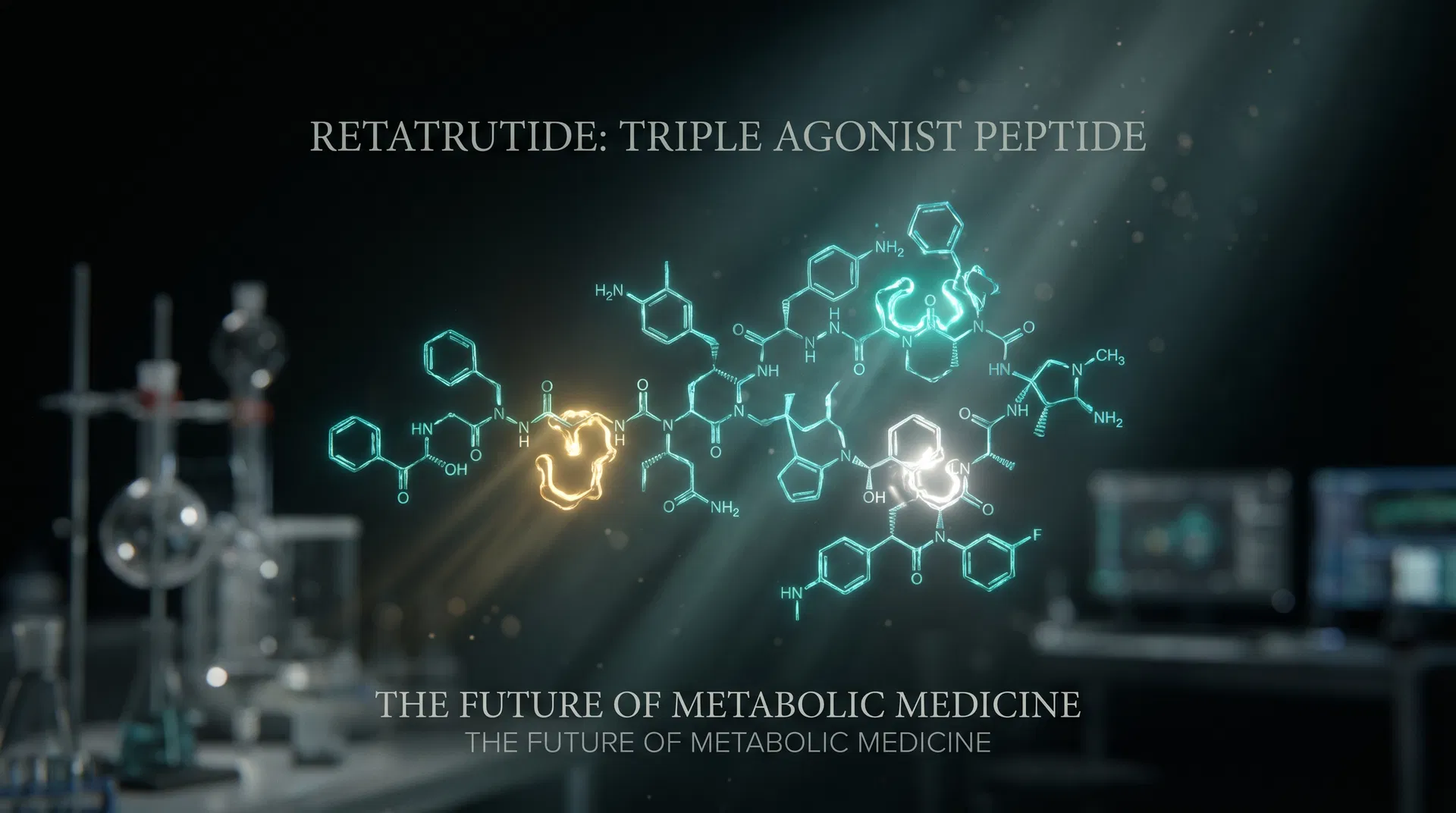
Research Use Only. This article is for informational and research purposes only and does not constitute medical advice. Always consult a qualified healthcare professional before making any health decisions.
What Is Retatrutide?
Retatrutide is a synthetic peptide that acts as a triple agonist, simultaneously targeting three G-protein-coupled receptors: the glucagon-like peptide-1 receptor (GLP-1R), the glucose-dependent insulinotropic polypeptide receptor (GIPR), and the glucagon receptor (GCGR). This tri-receptor activity is what separates it mechanistically from semaglutide (GLP-1 only) and tirzepatide (GLP-1/GIP dual agonist). By engaging all three pathways, retatrutide is hypothesised to produce additive effects on energy expenditure, appetite suppression, and hepatic glucose output.
The compound was developed by Eli Lilly and Company and assigned the internal designation LY3437943. Its molecular structure is a 36-amino-acid peptide with a C18 fatty diacid moiety attached via a linker to support extended half-life, enabling once-weekly subcutaneous administration in clinical protocols.
Current Research Status
Phase 2 clinical trial results published in The New England Journal of Medicine in 2023 reported that participants receiving the highest dose of retatrutide (12 mg weekly) achieved a mean body weight reduction of approximately 17.5% over 24 weeks, with a projected 24.2% reduction at 48 weeks based on trajectory modelling. These figures exceeded the weight-reduction outcomes observed in comparable Phase 2 trials for both semaglutide and tirzepatide at equivalent timepoints.
Phase 3 trials (TRIUMPH programme) were initiated in late 2023 and are ongoing as of 2026. The trials are evaluating retatrutide across several populations, including adults with obesity, type 2 diabetes, and non-alcoholic steatohepatitis (NASH). No regulatory approval has been granted in any jurisdiction as of the date of this article.
| Parameter | Semaglutide (Ozempic) | Tirzepatide (Mounjaro) | Retatrutide (Phase 2) | |---|---|---|---| | Receptor targets | GLP-1R | GLP-1R, GIPR | GLP-1R, GIPR, GCGR | | Mean weight loss (48 wk) | ~15% | ~22% | ~24% (projected) | | Dosing frequency | Weekly | Weekly | Weekly | | Approval status | Approved | Approved | Phase 3 trials |
Why Researchers Are Interested
The addition of glucagon receptor agonism is the key differentiator. Glucagon is classically associated with raising blood glucose, which initially made GCGR agonism seem counterproductive in metabolic disease contexts. However, research has demonstrated that when glucagon signalling is engaged alongside GLP-1 and GIP activity, the net effect on the liver is a significant increase in fatty acid oxidation and thermogenesis, without the hyperglycaemic consequence seen when glucagon acts alone. This mechanism is particularly relevant to research into non-alcoholic fatty liver disease (NAFLD) and NASH, conditions for which no approved pharmacological treatment currently exists.
Additionally, the glucagon component appears to contribute meaningfully to the total energy expenditure increase observed with retatrutide, which may explain why its weight-reduction figures in Phase 2 surpassed those of dual agonists at comparable doses.
Reconstitution and Research Handling
Retatrutide is available as a lyophilised powder for research purposes. Standard reconstitution practice involves bacteriostatic water (0.9% benzyl alcohol in sterile water), which preserves the solution for up to 28 days under refrigeration at 2–8°C. Researchers should note that retatrutide, like all GLP-1-class peptides, is sensitive to repeated freeze-thaw cycles; aliquoting prior to storage is recommended to preserve peptide integrity.
Purity verification via HPLC and mass spectrometry is essential before any research use. Certificates of Analysis (COA) should confirm ≥98% purity and the absence of residual solvents and endotoxins.
Important Disclaimer
Retatrutide is a research compound currently undergoing clinical trials. It is not approved for human therapeutic use in any country. All information presented in this article is intended for educational and research purposes only. Feel Pure Peptides supplies retatrutide exclusively for legitimate in-vitro and pre-clinical research applications in compliance with applicable regulations.
Last updated: April 2026 | Author: Feel Pure Peptides Research Team