
Grey Market Peptides: Understanding the Regulatory Landscape and Quality Risks
The search for 'grey market peptides' reflects genuine confusion about the regulatory status of research compounds. This guide clarifies the legal framework across major jurisdictions and explains how quality varies dramatically — and why it matters for research validity.
Research Use Only. This article is for informational and research purposes only and does not constitute medical advice. Always consult a qualified healthcare professional before making any health decisions.
What Does "Grey Market" Mean for Peptides?
In the context of peptides, the grey market refers to the sale of compounds that are not approved as pharmaceutical drugs but are not explicitly prohibited either. Most research peptides — BPC-157, TB-500, Sermorelin, CJC-1295, and others — occupy this space. They are synthesised and sold legally as "research chemicals" or "research compounds" intended for laboratory and in-vitro use, not for human consumption or therapeutic application.
The legal basis for this market varies by jurisdiction:
| Jurisdiction | Regulatory Framework | Key Points | |---|---|---| | United States | FDA oversight (21 CFR) | Not approved drugs; legal to sell for research; illegal to market for human use | | United Kingdom | MHRA / General Sale | Most peptides are unscheduled; legal to possess and sell for research | | Australia | TGA Scheduling | Several peptides (e.g., BPC-157, TB-500) are Schedule 4 — prescription only | | Canada | Health Canada | Research chemicals in a legal grey area; not approved for human use | | European Union | EMA / national agencies | Varies by member state; generally legal for research |
The critical distinction in most jurisdictions is the intended use. A supplier selling BPC-157 labelled "for research use only, not for human consumption" is operating in a different regulatory category than a supplier marketing the same compound as a treatment for injury recovery.
Why Quality Varies So Dramatically
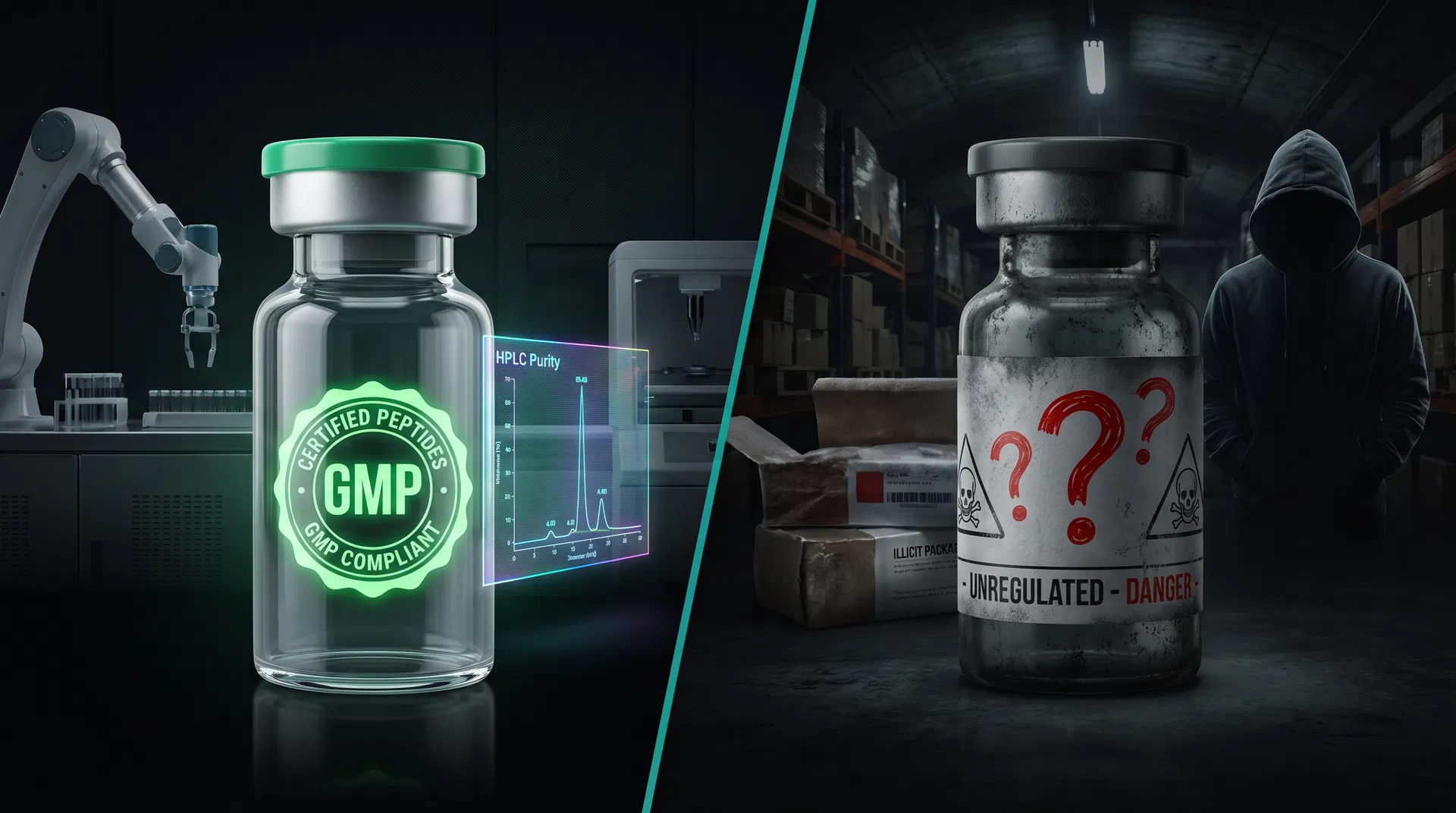
The grey market status of research peptides creates a significant quality disparity between suppliers. Because these compounds are not subject to pharmaceutical Good Manufacturing Practice (GMP) requirements in most jurisdictions, there is no mandatory independent verification of purity, potency, or sterility.
Common quality failures identified in independent testing of grey market peptides include:
Underdosing. Studies testing commercially available research peptides have found that a significant proportion of products contain substantially less active compound than labelled — in some cases, less than 50% of the stated amount.
Contamination. Without sterile manufacturing environments, lyophilised peptide powders can contain bacterial endotoxins, residual solvents from synthesis, or particulate matter.
Sequence errors. Peptide synthesis is a technically demanding process. Without HPLC and mass spectrometry verification, there is no guarantee that the synthesised sequence matches the stated compound.
How to Identify a Reputable Research Peptide Supplier
Third-party Certificates of Analysis (COA). Every batch of every compound should be accompanied by a COA from an independent, accredited laboratory. The COA should include HPLC purity data (target: ≥98%), mass spectrometry confirmation of molecular weight, and ideally endotoxin testing results.
Transparent manufacturing information. Reputable suppliers can describe their manufacturing process, including the synthesis method (solid-phase peptide synthesis is standard), purification approach (reverse-phase HPLC), and lyophilisation conditions.
Clear research-use labelling. Legitimate suppliers are unambiguous that their products are for research use only. Any supplier making therapeutic claims is operating outside the regulatory framework and should be avoided.
Responsive and knowledgeable support. A supplier whose team can answer technical questions about peptide handling, reconstitution, and storage is a meaningful quality signal.
Important Disclaimer
Feel Pure Peptides supplies all compounds exclusively for legitimate research purposes. All products are accompanied by third-party Certificates of Analysis and are manufactured to research-grade purity standards. Nothing on this website constitutes medical advice or encourages the use of research compounds for therapeutic purposes.
Last updated: April 2026 | Author: Feel Pure Peptides Research Team